
Samhain, the pagan harvest festival that we now call Halloween, was an important event celebrated at the end of October and start of November in Ireland and Britain during the so-called ‘Celtic’ period. It marked an important transition time as the summer ended and the cold winter approached.
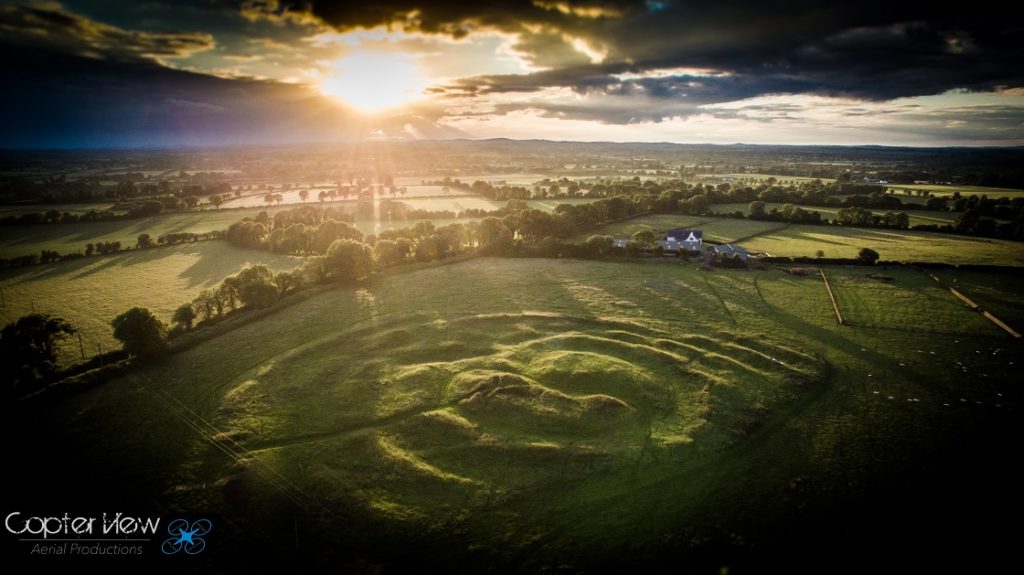
According to legend, Samhain originated here in County Meath in the Boyne Valley more than 2,000 years ago. At the ancient Hill of Tlachtga, near Athboy, the Samhain Fire Festival began, celebrating this time of harvest and transition, with feasting and games as the long winter nights approached.
The Irish legends tells us that many important or portentous events took place at Samhain. It was at Samhain when the spirits of the Otherworld, the ‘Sidhe‘, were more likely to emerge from their mounds (also called ‘sidhe‘) such as Newgrange, Knowth, Loughcrew and others elsewhere in Ireland.
The Hill of Tlachtga and Samhain
One place in County Meath that has a strong mythical association with Samhain is the Hill of Tlachtga, now called the Hill of Ward, one mile east of Athboy. Legend has it that during the time of the Tuatha Dé Danann, the hill took its name from a sun goddess called Tlachtga. She was the daughter of the druid, Mogh Ruith and in one legend Tlachtga died giving birth to three sons; Dorb, Cuma and Muacth and was buried on the hill.
Listen to some wonderful audio on the Hill of Ward & Rathmore Church, Athboy, County Meath – Part of the Boyne Valley Drive.
Samhain in the Boyne Valley
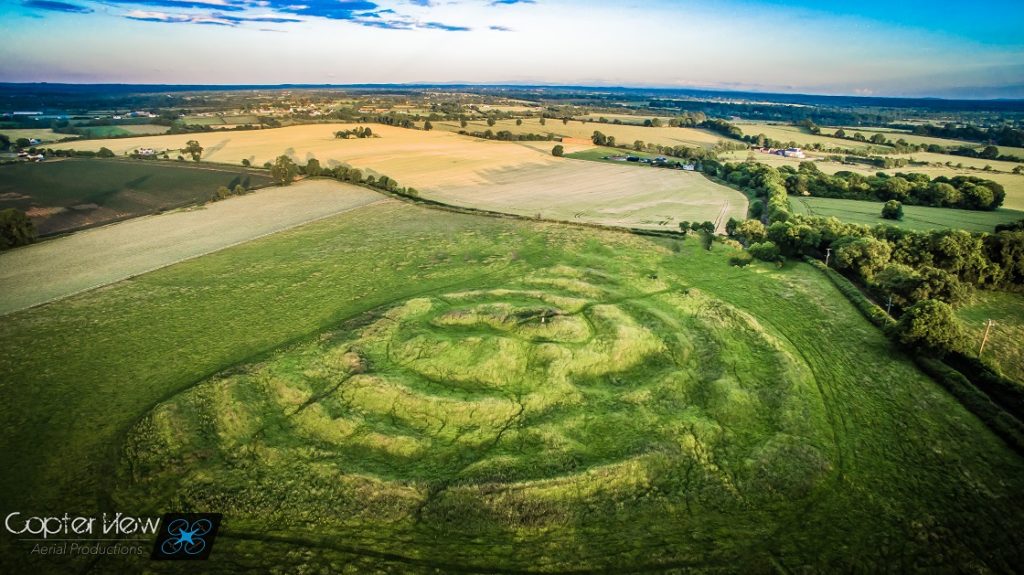
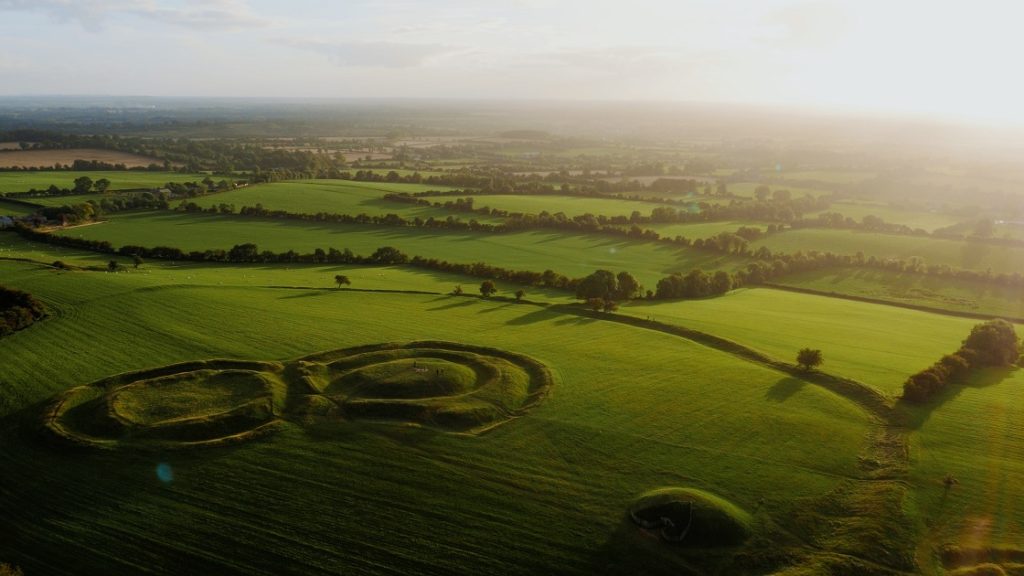
It wasn’t only the Hill of Tlachtga that has a Samhain association in Meath. The passage tomb on the Hill of Tara known as the Mound of the Hostages might have been built on a Samhain sunrise alignment. Some believe that Cairn L and Cairn U at Loughcrew were also built on a Samhain (and Imbolc) alignment to honour the cross-quarter days.
Modern Halloween
The origins of Halloween on the 31st October are obscure but it likely contains elements of the old Samhain festivals. Samhain incorporated aspects of Irish, Scottish and Welsh customs. It also contains elements of Christian traditions, especially when the Christian festival of All Saints Day and All Souls Day were moved in the medieval period to 1 November and 2 November respectively.
Modern folklore celebrates Halloween as a time where spirits must be appeased lest they cause mischief among the living, and even the living are allowed to cause mischief that they usually wouldn’t be allowed to get away with! Many aspects of Halloween have developed from these northern European folk customs, such as dressing-up, bobbing for apples and making offerings of food and trick or treating, and when Europeans migrated to America they brought these customs with them. In the USA Halloween grew in popularity and reemerged in Ireland and Britain, and then Europe, in the later twentieth century.
The Jack O’Lantern is first mentioned in America in the late 18th century (specifically a turnip lantern in 1778 in Pennsylvania), followed by mentions of its use in late 18th century England and Scotland. Turnips and pumpkins were used by the poor as lanterns in Ireland and Britain and they were first linked to Halloween in a Scottish dictionary in 1808. More info here.